

While Colombia Debates Mandatory Financial Education, an Argentine city is already Implementing it from kindergarten
Bogotá, August 2026 – The Colombian House of Representatives has begun studying a bill to create the National Program for Economic and Financial Education, making it mandatory from preschool through eleventh grade in both public and private schools. This need is highlighted by the 2022 PISA test results, in which 71% of Colombian students failed to reach the minimum proficiency level in Mathematics.
More than 3,000 kilometers away, the Municipality of Córdoba, Argentina, has already been addressing this same gap for a year. This year, it became the first jurisdiction in the country to incorporate financial education from kindergarten to sixth grade, now reaching over 16,000 students across its 86 educational institutions (nursery schools and primary schools).
To advance the integration of financial education, the Córdoba Secretariat of Education designed an implementation strategy based on three pillars: curriculum guidelines, teacher training, and educational resources, tools, and innovation.
The first pillar involved developing specific curriculum guidelines for the primary level, establishing a common framework and a progression of learning for a cross-curricular approach. Its development drew from international trends and experiences as strategic inputs to create a proposal tailored to Córdoba's educational reality.
The second pillar focused on teacher training, with initiatives developed in partnership with specialized institutions, including the Banco Credicoop Foundation and Bancor, the public bank of the Province of Córdoba.
The third pillar incorporated educational resources, tools, and innovation to enrich learning experiences. Within this framework, Matific is integrated through its Financial Education module for students in fourth to sixth grade. The module features activities that connect mathematical content with situations related to budgeting, saving, consumption, and decision-making.
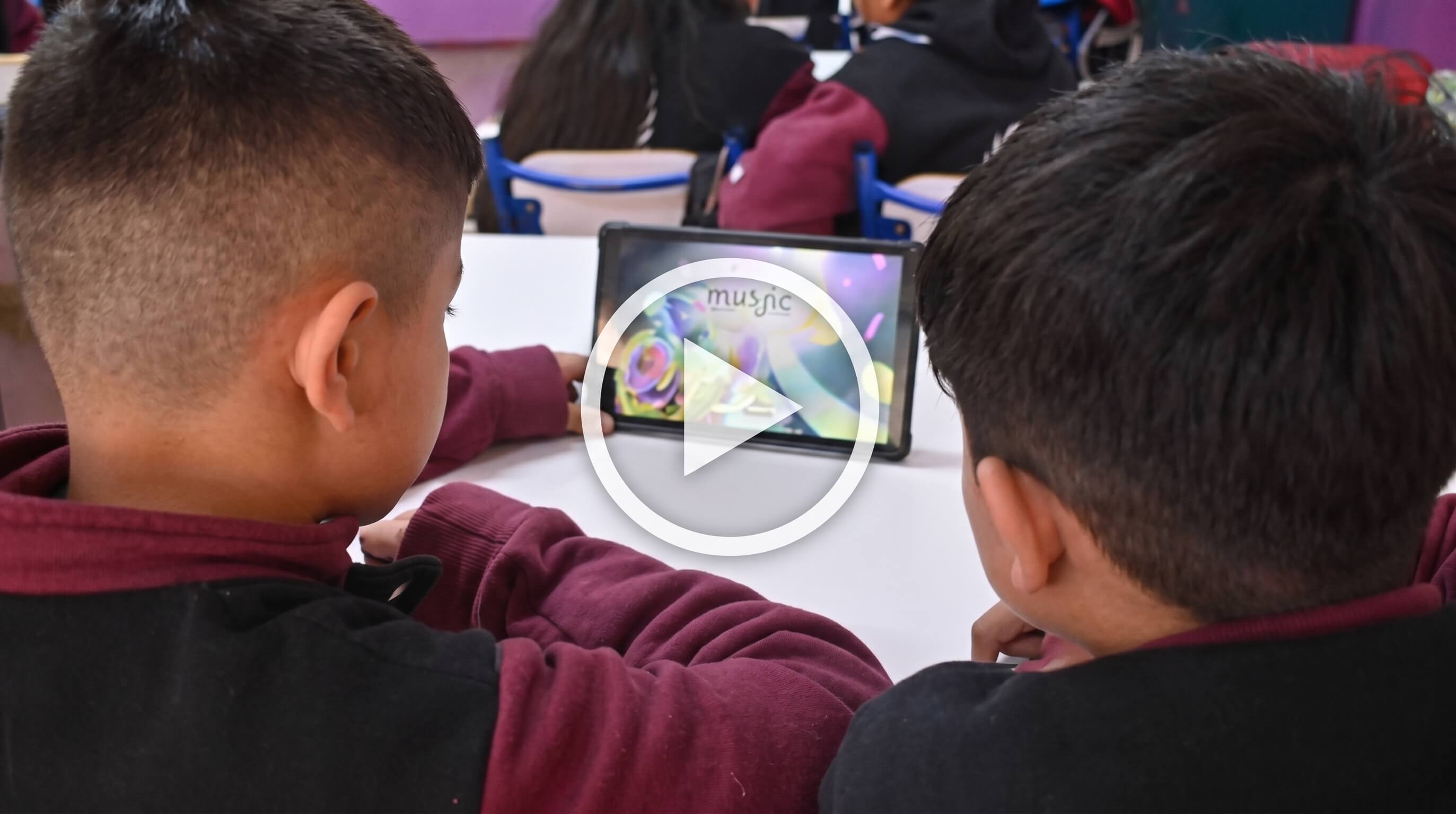
The City of Córdoba, Argentina, became the first jurisdiction in the country to introduce Financial Literacy.
"The inclusion of this resource is also based on a principle of equitable access. We did not want technology to widen the gaps between those who have access to these tools and those who do not. That is why we decided to guarantee access to the resource in all schools covered by the initiative, rather than limiting it to a pilot program," explained Alicia La Terza, Secretary of Education for the Municipality of Córdoba.
Currently, 215 teachers have classes assigned on the platform. The experience has also begun to extend into homes, with some families expressing interest in using the resource with their children, sparking conversations about saving, consumption, and daily decisions beyond the classroom.
The next step, she said, is to finalize an agreement with banking institutions so that every student receives their own savings account upon finishing sixth grade, under the guidance of their parents. The scope is not limited to early and primary education. The Municipality has 29 centers that offer primary school completion for adults who could not finish school as children, and it is already working to bring the financial education curriculum to them as well.
The Córdoba case comes to Bogotá through Edutechnia, the educational innovation fair at Corferias, which will be held from August 26 to 28. This event takes place just as Colombian educational authorities are beginning to explore how to bring financial education into the classroom, and Matific will also be present.
To learn more visit us